
On the origins of ‘She Who Rests’
by Prof. L.L. Powell
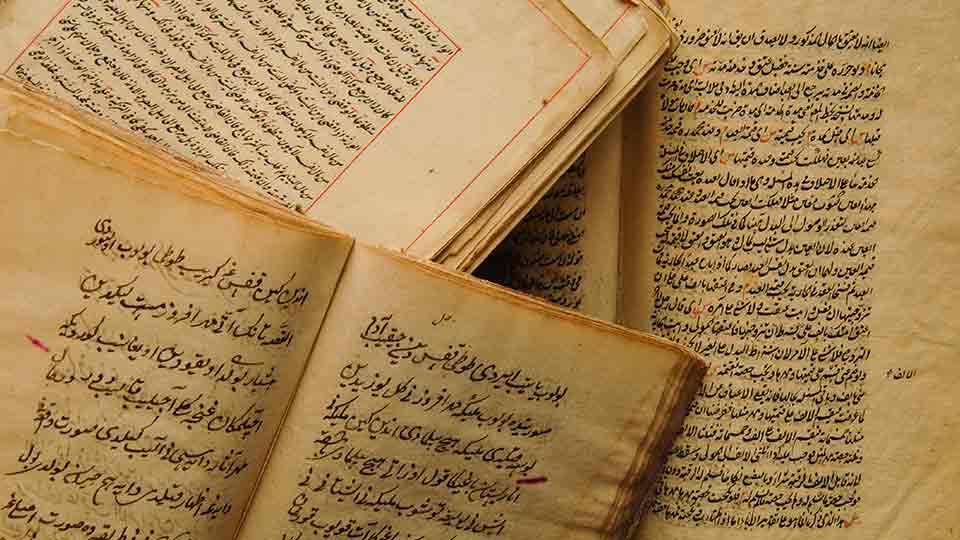
The recent discovery of the al-Khwarizmi ‘fragment’ has created a minor stir in the world of ancient religious studies. The description of a hitherto unknown cult, recorded by the great Islamic polymath himself, could hardly do otherwise.
Yet again, history has presented us with a fresh problem to solve.
As others have suggested, the fragment itself presents a tantalizing mystery. It tells the story of a visiting Masonite sorceress who arrives in Baghdad, begging an audition with al-Khwarizmi. In private, she tells him of a strange, isolated cult centred on a nameless woman.
A woman (‘She who rests’) whose existence is mentioned nowhere else in the ancient world. Yet who is (in secret, it must be assumed) once again being worshipped across the whole of the Mediterranean and beyond.
The sorceress recounts the mythology of the cult. In the distant past, a woman – born form neither god nor man – declares war on the gods. While the outcome of the battle is unclear, she is somehow betrayed. Hercules aides her escape, hiding her in an unknown location, promising her return. The cult has no temples, no priests, no prayers. The only other piece of information offered is the importance of the pillars of Hercules. Which pillars and where is not noted.
Then the fragment breaks off. Scrawled in the margins are two Greek words, repeated three times. οὐκέτι ζει, οὐκέτι ζει, οὐκέτι ζει; ‘It lives no more’.
It would be simple to dismiss the story as a fantasy, or worse, an elaborate forgery. Indeed, many modern scholars have fallen into this trap, suggesting that Al-khwarizmi wanted to undermine the Masonites and made the whole thing.
I would argue against such haste. Al-Khwarizmi lived in the intellectually curious world of the 9th century. He was thorough, his advances in mathematics and geography astounding, his world secure.
There may be another path. The Masonites were still a Christian community, living inside the Islamic word. Christianity itself evolved out of a need for secrecy under the first centuries of the Roman Empire. Jesus could, at a stretch, be viewed as neither a man nor a deity; as one who fought the (false) gods of Rome.
Is it so hard to imagine that ‘She Who Rests’ is simply another variation of Christ our Saviour? Perhaps mixed in with the Zoroastrian Anahita, whose cult spread throughout the Middle East?
This seems to me a fruitful line for further study. More so than a fantasy; more than a cult that was somehow kept hidden throughout history.
Only the strange words or οὐκέτι ζει confound us. Who lives no more? The nameless woman? Some other lost figure of the myth? The past, as always, present more questions than answers.
Prof. Powell,
Dept of Classics, University of Michigan, 1973
 hennathedeceiver.com
Leave a comment